
Data silos pose challenges while deriving insights

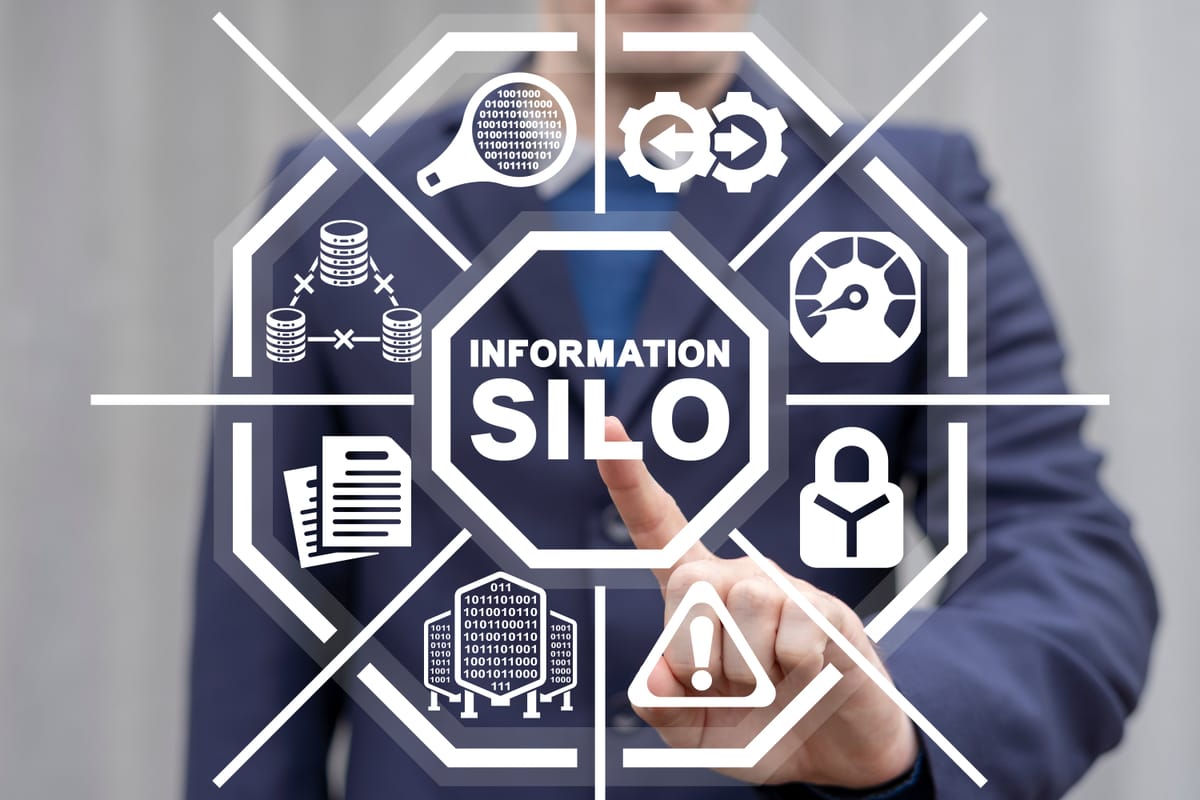
Enterprise data is often scattered across multiple silos—CRM systems, sales trackers, inventory databases, work orders, and spreadsheets. This fragmentation poses significant challenges for data analysts seeking to extract meaningful insights.
Enterprise data typically resides in multiple silos such as:
- CRM systems with data on customer interactions and sales leads
- Sales trackers which store data on orders, revenues, and pipeline
- Inventory databases which have data on stock levels and supply chain information
- Work orders that capture operations and service requests
- Relational databases and excel sheets
Each system is optimized for its own purpose but rarely designed for seamless integration. This creates silos—isolated data repositories that hinder holistic analysis.
Key challenges
- Data fragmentation
- Different departments use separate systems, leading to disconnected datasets with no unified view.
- Data formats and structures vary widely (for example, CRM and Excel), making integration complex and error prone.
- Data inconsistency
- Limited accessibility
- Access controls and permissions restrict who can view or extract data from each silo.
- Legacy systems may not support modern APIs or integration tools, making data extraction slow and manual.
- Delayed Decision-Making
- Analysts spend excessive time gathering and cleaning data from multiple sources before analysis can begin.
- Real-time insights are nearly impossible when data consolidation is manual and periodic.
- Incomplete insights
- Siloed data means analysts only see part of the picture, missing critical connections (for example, sales trends vs. inventory levels).
- Unstructured or semi-structured data (emails, notes, PDFs) is often excluded from analysis due to extraction difficulties.
- Governance and compliance risks
- Siloed data complicates organization-wide governance, making it hard to enforce policies and ensure compliance.
- Sensitive data may be mishandled or duplicated across silos, increasing the risk of breaches.
Why is it hard to extract insights?
- Technical Barriers: Integrating data from disparate systems requires custom connectors, ETL pipelines, and ongoing maintenance.
- Organizational Barriers: Departments may resist sharing data due to privacy concerns, lack of trust, or cultural silos.
- Analytical Barriers: Without unified, clean data, advanced analytics (AI, machine learning) cannot be effectively deployed.
AnalysisGPT
AnalysisGPT is designed to break down these silos and empower analysts with instant, actionable insights. Here’s how:
- Unified data access
- Connects directly to databases, spreadsheets, and other data sources—no coding or complex setup required.
- Enables analysts to ask questions and get real-time dashboards and automated reports instantly.
- Powerful insights
- Surfaces hidden trends, predictive insights, and business intelligence across all connected data.
- Bridges the gap between raw data and decision-making, turning every question into actionable intelligence.
- Easy Integration
- Seamlessly integrates with favorite tools and data sources, updating connections as workflows evolve.
- Reduces technical overhead by automating data requests and report generation.
- Enterprise-grade security
- Built for secure data management—GDPR, SOC 2, and ISO 27001 compliant.
- Read-only access ensures data is analyzed but never altered, stored, or moved outside your environment.
- Instant answers and visualization
- Generates clear schema views, charts, and dashboards in seconds.
- Delivers instant clarity from your data, enabling faster, smarter decisions.
- Reduced technical overhead
- Frees technical teams from ad-hoc data requests, allowing them to focus on strategic initiatives.
- Automated reporting and AI-powered agents deliver answers without manual intervention.
Enterprise data silos are a major barrier to effective analytics, but AnalysisGPT offers a modern, AI-powered solution. By unifying access, automating insights, and ensuring security, AnalysisGPT enables organizations to unlock the full value of their data—no matter where it resides.
If your organization is struggling with fragmented data and slow, incomplete insights, it’s time to consider AnalysisGPT for instant, actionable business intelligence.

